Zapper Electrode placement and effectiveness
Comparing zapper signal strength using different electrodes
These images were produced using ParaZapper brand Hulda Clark Zappers
and because of technological differences do not apply to other sappers
These references also do not apply Ultimate Zapper due to the non-standard output that does not meet Dr. Clark's requirement of positive offset.
Also, please remember that it take a stronger zapper like ParaZapper, available from Hulda Clark Zapper Co. in order to be able to power larger electrodes such as the foot pads.
| Effectiveness of zapper signal using copper paddles only | |
|---|---|
 Wrist near green wir e Note that the signal is lower than the others and that it is very rounded. This indicates that much of the high frequency signal is absent implying that parasites near this point most likely will not be killed. |
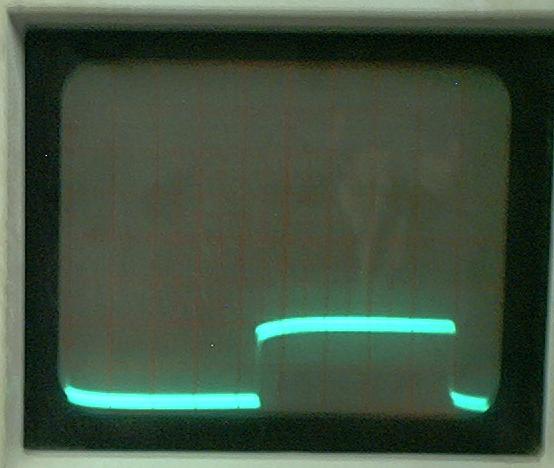 Shoulder near green wir e Note that while this signal is more square than it is at the wrist, there is still some attenuation of the high frequency component. It is unlikely that any parasites hiding in the arm near the green wir e would be killed. |
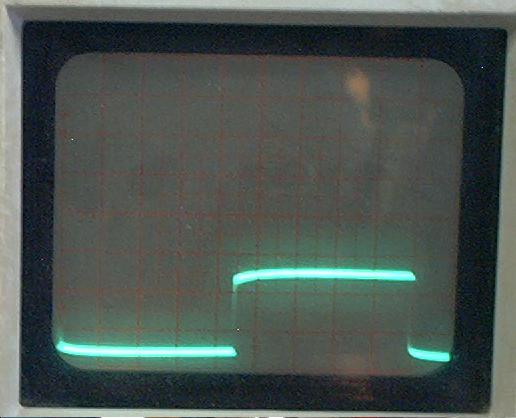 Shoulder near red wir e This signal is more square and stronger than the one from the shoulder near the green wir e. Parasites are far more likely to be affected by a stronger signal like this. |
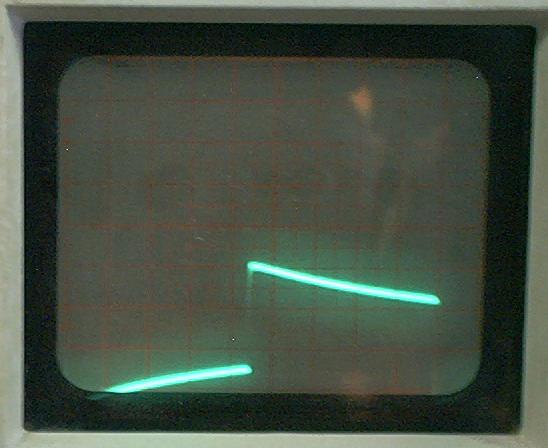 Wrist near red wir e Note the very sharp leading edge and the spike that indicate a strong high frequency component near the red wir e electrode. The overall signal is stronger. This is ideally what you would want to observe all over. |
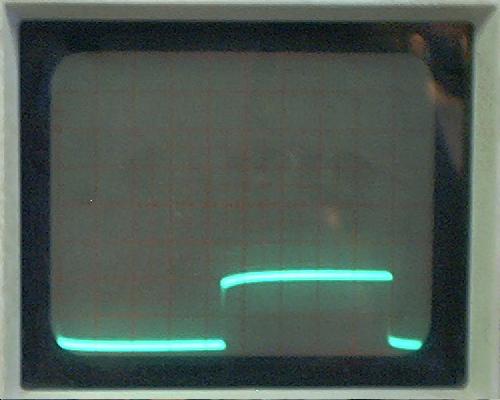 Abdomen when using copper paddles alone Note the lower strength and rounded corners that are present in this signal from the abdomen as compared to the shoulder. This indicates that not much effectiveness would be noted in the abdomenal area. |
Note: All measurements shown are measured from the negative contact to specified points on the body, not to the positive electrodes which are placed at the hands and feet (where applicable). Copper paddles used are 3/4 inches diameter. Copper footpads are 11-1/2 inches long and are from 3-1/2 inches to 4-1/2 inches in width. |
|
Discussion
The most important implication that can be drawn from the images above is that the signal strength and integrity is reduced near the negative electrode and therefore, the effectiveness of the zapper will be the least near the green wir e or negative electrode. It should also be noted that the voltage applied to any area between the shoulders will not be the full output of the zapper. Keep the negative electrode away from important body parts and hold it at the extremities. |
|
| Effectiveness of zapper signal using copper footpads only | |
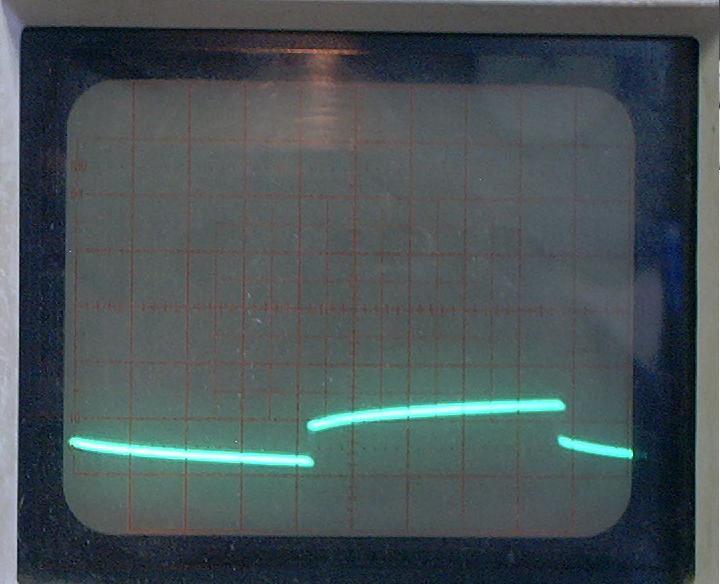 Footpads only near green wir e Note that the signal is lower than the others and that it is very rounded. This indicates that much of the high frequency signal is absent implying that parasites near this point most likely will not be killed. |
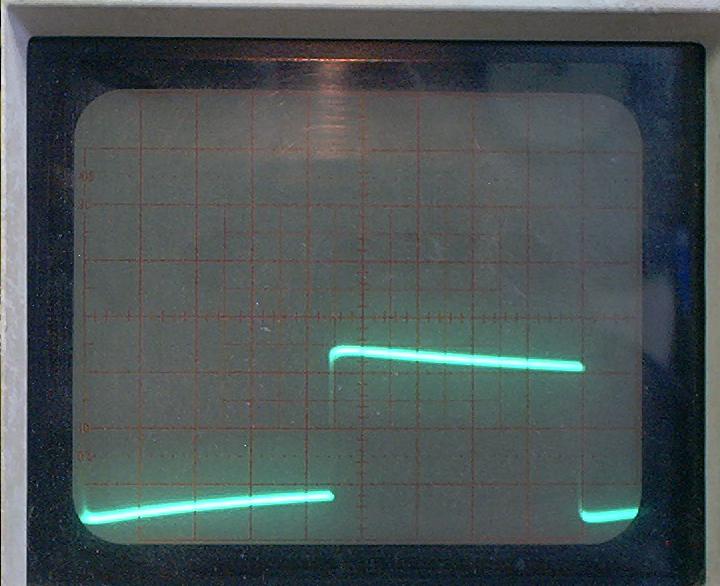 Footpads only near red wir e Note the strong leading edge that indicates a strong high frequency component near the red wir e electrode. The overall signal is stronger than with the copper paddles. This is ideally what you would want to observe all over. |
 Abdomen with footpads only In this signal from the abdomen the signal is slightly stronger than that resulting from using copper paddles. This indicates that the larger contact area of the footpads slightly increases the effectiveness in the abdomenal area. |
|
|
Discussion
Again, the most important implication that can be drawn from the images above is that the signal strength and integrity is reduced near the negative electrode and therefore, the effectiveness of the zapper will be the least near the green wir e or negative electrode. Also, while slightly stronger in the abdomen, the signal will not be the full output of the zapper. It is important to note that when it comes to zapper effectiveness, size makes a difference. |
|
| Effectiveness of zapper signal using copper footpads and copper paddles with two negative contacts | |
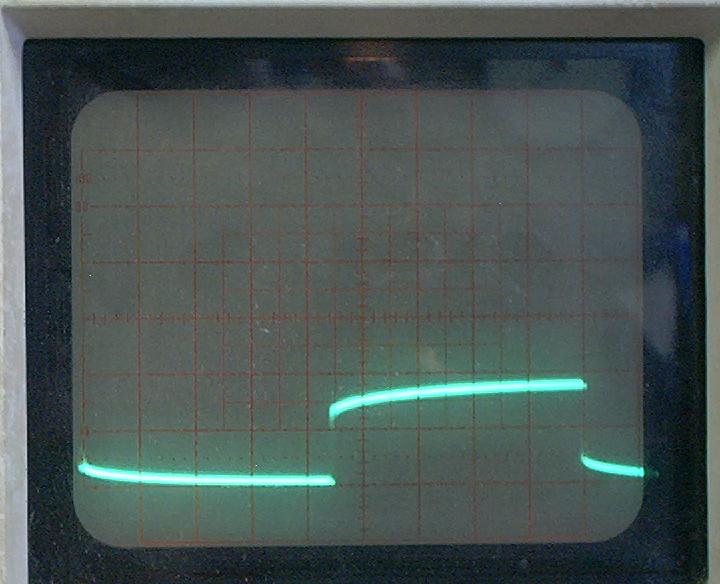 Abdomen with one negative footpad and one negative paddle (improper usage) Note the lower strength and rounded corners that are present in this signal from the abdomen. This indicates that not much effectiveness would be noted in the abdomenal area. |
Abdomen when using copper paddles alone Note that the strength is higher than the improper footpad usage produces and that the corners are less rounded. |
|
Discussion
Some zapper sellers mistakenly provide footpads arranged so that the user has two negative contact points on the body instead of the better setup which has one negative and three positive.The resulting signal at the abdomen is actually weaker than using just copper paddles and would be expected to produce poor results. Improper footpad usage can actually degrade the effectiveness of the signal. |
|
| Effectiveness of zapper signal using copper footpads and copper paddles with one negative contact | |
 Abdomen with augmentation footpads (proper usage) Note the higher strength, sharper rise, and pointer corners that are present in this signal from the abdomen. This indicates that greater effectiveness would be noted in the abdomenal area. |
Abdomen when using copper paddles alone Note that while the output is less than that found with proper footpad usage, the strength is higher than the improper footpad usage produces and that the corners are less rounded. |
|
Discussion
When both of the footpads are arranged with a positive connection along with one positive paddle and one negative paddle the signal to the torso is stronger and the contains higher frequencies that are needed for effectiveness. |
|
| Diagram of proper footpad usage | |
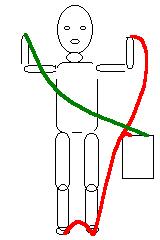 Both footpads and one hand are positive. |
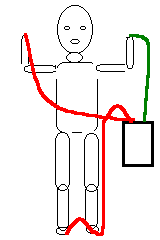 Swap hands each time you turn the zapper on. |
|
Note: It is OK to sit.
|
|
|
Note: This information is valid for all standard Hulda Clark type zappers but is not valid for certain special zappers like the MX-2 and the AV-2 which have a differential output for better results. It also may not be valid for the Ultimate Zapper due to the non-standard output that does not meet Dr. Clark's requirement of positive offset.
Also, cheap zappers, weak zappers, or zappers that do not have a LM555 type chip driving the output will not produce a strong enough output to support the footpads. |
|
Send comments to: sales@paradevices.com
Like us on Facebook
Visit us at ParaZapper Facebook page
Ultimate Zapper vs UZI Comparison ParaZapper UZI Review
The Zapperwas introduced in 1993, has been around a while and it has been claimed to work for Cancer, Allergy Zapper and Allergies, Asthma, fibromyalgia, IBS, Colitis, and Diarrhes, and shingles, among many other thins, it is best known as a Parasite Zapper, or as a Hulda Clark Zapper.
It has also been known as an Arthritis Zapper, AIDS Zapper, Flu Zapper, Cancer Zapper, Candida Zapper, Viral Zapper, and even as a Survival Zapper. There is even reference to the Hanta Virus Zapper and to the West Nile Virus Zapper.
There are plans to Build a Zapper How to make your own Zapper, and a zapper schematic diagram, zapper schematic, and another zapper schematic, but since this is not something that everyone wants to do, some want to know How to Buy a Zapper. Naturally, they will want to learn about zappers and things such as CCa, about the Super Deluxe Zapper Improved, and the Rife Zapper, and especially Ultimate Zapper vs UZI Comparison. They will also want to read the ParaZapper Testimonials that are posted. It is also helpful that the potential user read either the How to Zap PDF or the How to Zap page, and even the Zapper FAQ and information.
They will also want to learn about things such as fasting, flushing, cleansing, and Colloidal Silver to help with Chronic illness and Critical illness while they zap your way to health.
Potential zapper users might also want to learn about Zapper Paddles, Wrist Straps for zapping, and Zapper Footpads.
They will likely want to learn more about Is Hulda Clark A Quack?, and her protocols, how to find the Best Zapper, the ParaZapper UZI Review.
The medical electric battery an antique electro-therapy device
Colds and Flu Zapper may help reduce the effects of colds and flu.
Hulda Clark Zappers information.
About Cancer and what can heal you.
Basal Cell Skin Cancer, Zapper Method
Ultimate zapper is cheaply made.
ParaZapper Parasite zappers are the best.
Hulda Clark Parasite Zappers
Zapper at paradevices
Cancer information and things that you may not know.
Battery installation.
Intestinal Parasites and how to treat them.
Delusional Parasitosis Zapper, does it work?
parasite treatment
parasite cleanse to help get rid of parasites.
Notice: On advice of counsel, we are required to inform you that the statements and claims on this web site have not been evaluated by the Food and Drug Administration and are not intended to diagnose, treat, cure or prevent any disease -- not for use on humans or with pets. These battery powered devices are not offered or intended for human use or to diagnose or prescribe for medical or psychological conditions nor to claim to prevent, treat, mitigate or cure such conditions, nor to recommend specific products as treatment of disease or to provide diagnosis, care, treatment or rehabilitation of individuals, or apply medical, mental health or human development principles. The devices discussed herein have not undergone evaluation and/or testing by the United States Food and Drug Administration or like agency of any other country. Risks that might be determined by such testing are unknown. The information on this site is not a substitute for medical or veterinary advice.
ParaZapper is a trademark of
Para Systems, Inc.
Lower Entrance
5537 Balboa Ct.
Pinson, AL 35126 USA
All rights reserved.